Get First hand weekly updates from our Team

The Policy Vault Insights and Opinions

Although governments and multilateral institutions publish extensive policy material, finding authoritative African policy documents remains a significant challenge for legal scholars, trade analysts, development economists, researchers and investors. Secondary sources can provide valuable context, but they may omit important details or misinterpret administrative intent. A news article may summarise a proposed tax directive, a consultancy report may interpret an infrastructure roadmap, and an academic paper may analyse energy reforms. When research requires reliable evidence of what a government or regional institution has officially adopted, researchers must consult the original document. This article explains where to find African policy documents, how to determine whether a document is authoritative and current, and how databases such as Policy Vault can support more efficient research.

Where Can Researchers Find African Policy Documents?

Although governments and multilateral institutions publish extensive policy material, finding authoritative African policy documents remains a significant challenge for legal scholars, trade analysts, development economists, researchers and investors. Secondary sources can provide valuable context, but they may omit important details or misinterpret administrative intent. A news article may summarise a proposed tax directive, a consultancy report may interpret an infrastructure roadmap, and an academic paper may analyse energy reforms. When research requires reliable evidence of what a government or regional institution has officially adopted, researchers must consult the original document. This article explains where to find African policy documents, how to determine whether a document is authoritative and current, and how databases such as Policy Vault can support more efficient research.

Read More

Sudan Conflict: No Peace in Sight

Sudan Conflict: No Peace in Sight

This newsletter edition provides a brief update on the Sudan Conflict. It highlights the current situation in the country since fighting broke out between the rival forces in mid-April and also provides recommendations to resolve the conflict.

Read More

Zimbabwe’s Election Challenges and New Carbon Trading Law

Zimbabwe’s Election Challenges and New Carbon Trading Law

In this newsletter edition, we highlight the challenges faced during the 2023 Zimbabwe’s elections and the newly debuted Zimbabwe Carbon Trading Law.

Read More

Another Failed Attempt to End the Violence in Sudan

Another Failed Attempt to End the Violence in Sudan

Several attempts have been made to reach a truce, but each has stalled out. Failing to reach a lasting truce this time punctures the relative peace present in the capital, Khartoum, and further worsens the humanitarian crisis. The biggest challenge is the fact that this power struggle pits two sizable and quasi-independent armed forces against each other. With this in mind, there are some strategies highlighted in this article that could make the warring sides come to the bargaining table in good faith.

Read More

Tigray Truce Has Not Calmed Situation in Ethiopia

Tigray Truce Has Not Calmed Situation in Ethiopia

Since November 2020, when armed conflict broke out, Tigrayans in Western Tigray have been subjected to torture, arbitrary detention, and forced deportation by local authorities and Amhara forces in Ethiopia's northern Tigray region. This is part of an ethnic cleansing campaign by the group to forcibly expel Tigrayans from the zone. While measures by the Ethiopian government have proven to be ineffective and less transparent. This article highlights key recommendations that could help calm the situation in Western Tigray.

Read More

Current State of Food Security in Africa

Current State of Food Security in Africa

This article analyzes the state of food security and nutrition in Africa. It also looks at the progress made towards the global nutrition targets.

Read More

Niger Coup: ECOWAS Rolls Out More Measures to Restore Democracy in Niger

Niger Coup: ECOWAS Rolls Out More Measures to Restore Democracy in Niger

In a previous edition, we discussed the latest military takeover in West Africa. It’s more than two weeks since the military led by General Abdourahmane Tchiani seized power from Niger's President Mohamed Bazoum, who has been held hostage since the power grab. This action has been widely condemned by the international community, with sanctions imposed on the country by the regional bloc, the United States and France, among others. In this article, we looked at the sanctions that have been imposed on Niger since the coup.

Read More

Nigerian Senate Confirms President Tinubu’s Ministerial Nominees

Nigerian Senate Confirms President Tinubu’s Ministerial Nominees

The Senate confirmation is part of the constitutional requirements to certify the competence and capacity of nominees prior to their appointment as ministers. While the process last week is commendable as all nominees were publicly screened, there are several public and policy concerns that should be addressed in future ministerial nomination and confirmation processes.

Read More

How Has Kenyan President William Ruto Fared Six Months Into His Tenure?

How Has Kenyan President William Ruto Fared Six Months Into His Tenure?

Elected on the promise of a "Bottom-Up Economic Transformation," President Ruto has taken several early actions in line with his pledges of economic transformation. He recently promised a KES50 billion annual commitment to the Hustlers Fund initiative —a financial inclusion fund to provide affordable credit to businesses, aimed at boosting economic growth and employment. He has also kept his promise on the housing and settlement plan by launching several affordable housing projects across the country.

Read More

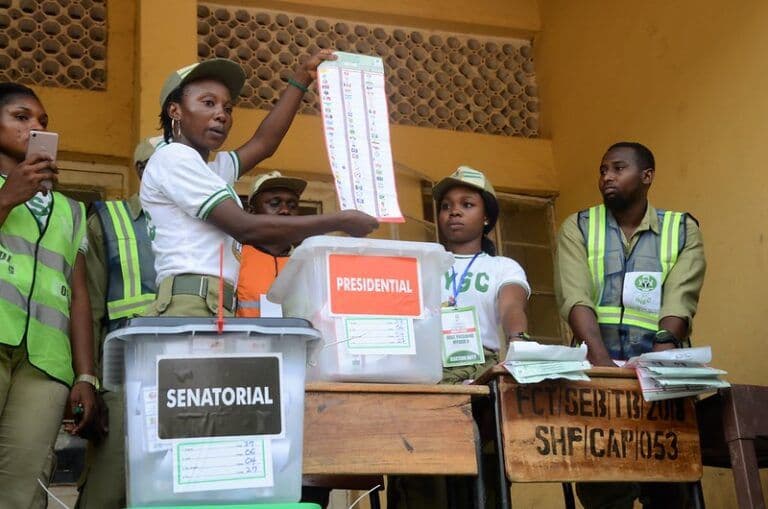
Looking Forward to Nigeria’s General Elections: What are the Big Issues?

Looking Forward to Nigeria’s General Elections: What are the Big Issues?

On February 25 and March 11, 2023, Nigerians will vote in the presidential and gubernatorial elections following a competitive electoral campaign where national issues such as unemployment, inflation, fuel scarcity, insecurity, fuel subsidy and theft, public sector corruption, and university lecturers’ strikes have dominated public discussions. The All Progressives Congress’ Bola Ahmed Tinubu, the People’s Democratic Party’s Atiku Abubakar and the Labour Party’s Peter Obi are the major candidates heading into the weekend polls, with the New Nigeria People’s Party’s Rabiu Kwankwaso playing the role of spoiler. While Nigerians would no doubt appreciate the fervour with which candidates have shared their plans with them, several other factors will play a key role in shaping the outcome of the elections. We consider these factors briefly.

Read More