Get First hand weekly updates from our Team

The Policy Vault Insights and Opinions

Although governments and multilateral institutions publish extensive policy material, finding authoritative African policy documents remains a significant challenge for legal scholars, trade analysts, development economists, researchers and investors. Secondary sources can provide valuable context, but they may omit important details or misinterpret administrative intent. A news article may summarise a proposed tax directive, a consultancy report may interpret an infrastructure roadmap, and an academic paper may analyse energy reforms. When research requires reliable evidence of what a government or regional institution has officially adopted, researchers must consult the original document. This article explains where to find African policy documents, how to determine whether a document is authoritative and current, and how databases such as Policy Vault can support more efficient research.

Where Can Researchers Find African Policy Documents?

Although governments and multilateral institutions publish extensive policy material, finding authoritative African policy documents remains a significant challenge for legal scholars, trade analysts, development economists, researchers and investors. Secondary sources can provide valuable context, but they may omit important details or misinterpret administrative intent. A news article may summarise a proposed tax directive, a consultancy report may interpret an infrastructure roadmap, and an academic paper may analyse energy reforms. When research requires reliable evidence of what a government or regional institution has officially adopted, researchers must consult the original document. This article explains where to find African policy documents, how to determine whether a document is authoritative and current, and how databases such as Policy Vault can support more efficient research.

Read More

The African Development Bank Group Welcomes Its New President-Elect, Dr. Ould Tah

The African Development Bank Group Welcomes Its New President-Elect, Dr. Ould Tah

Dr. Sidi Ould Tah, a renowned economist and banker from Mauritania, has been elected 9th President of the African Development Bank Group.

Read More

Q1, 2024: When Food Scarcity Trumped Non-Oil Exports Policy

Q1, 2024: When Food Scarcity Trumped Non-Oil Exports Policy

In the first quarter of 2024, following drastic policy changes in the preceding months (especially removal of fuel subsidy and currency float/devaluation of the Naira), as well as incidences of banditry and kidnapping, Nigerians experienced a sharp increase in inflation, food supply shortages and steep rise in cost of living. Food scarcity and attendant hunger quickly emerged as threats to peace and security across the country. To avoid escalation into widespread unrest, governments at the federal and subnational levels began to apply various measures to bring the situation under control.

Read More

President Tinubu’s Executive Order for Tax Waiver on Pharmaceutical Input

President Tinubu’s Executive Order for Tax Waiver on Pharmaceutical Input

On 28th June 2024, President Bola Tinubu signed an Executive Order to remove import duty/tariffs, and value-added tax on specified machinery, equipment and raw materials for production of pharmaceuticals, diagnostics, and medical devices such as needles and syringes, biologicals and medical textiles. The objective is to increase local production of healthcare products, reduce production costs, and enhance local manufacturers’ competitiveness.

Read More

Reviewing Buhari’s Administration Cash Transfer Policy 

Reviewing Buhari’s Administration Cash Transfer Policy 

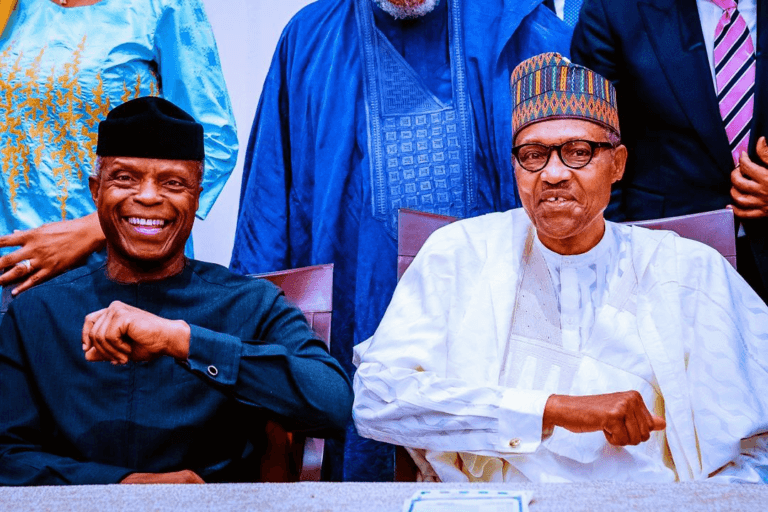
President Muhammadu Buhari established a Conditional Cash Transfer (CCT) programme as part of the broad 2016 Social Intervention Scheme, part of a key campaign promise to reduce poverty through robust social intervention. The Minister of Humanitarian Affairs emphasized the success of the CCT stating in a press brief, that since 2015, over 1 million households (7 million persons) have benefited. However, looking at the overall data, the number of Nigerians in poverty has increased, from 40.1 percent in 2015 to 45 percent in 2023. This data suggests poor households are no better off now compared to 2015. In this article, we discuss some issues and challenges for this.

Read More

Nigeria Imposes Additional Levy on Employers of Expatriate Workers

Nigeria Imposes Additional Levy on Employers of Expatriate Workers

On 27th February 2024, the President of Nigeria, Bola Ahmed Tinubu, approved the implementation of an annual Expatriate Employment Levy Scheme (the “EEL Scheme”). The principal effect of the EEL Scheme is that a private company or other private sector organisation in Nigeria that engages expatriate workers for a period equal to 183 days or more within a fiscal year, is required to pay an annual expatriate employment levy (the “levy”) to the Nigerian government in the sum of USD15,000 (for directors) and USD10,000 (for other expatriates i.e. non-directors). In our policy brief, we highlight the impact / things to note and assess the purported objectives of the EEL Scheme vis-s-vis the details set out in the EEL operational guidelines published by the Ministry of Interior. We also share our insight on recent foreign-investment related actions by the Ministry.

Read More

The Long Road Ahead for State Police in Nigeria

The Long Road Ahead for State Police in Nigeria

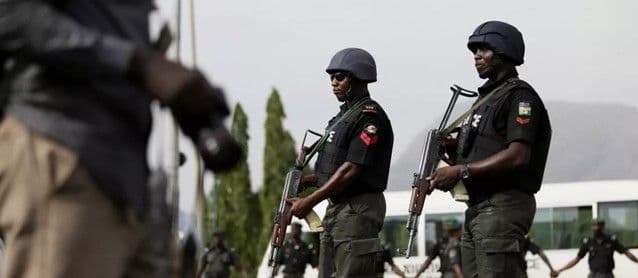
Recently, a Bill for the creation of state police was introduced in the House of Representatives, Nigeria's lower federal legislative house. The bill is supported by several merits. Firstly, it addresses the issue of over-centralization within the current structure of the Nigerian Police Force (NPF), which creates a bureaucracy that hampers quick reactions to security threats. However, apprehensions have been raised regarding potential abuse of this power by political leaders. Moreover, there are regulatory hurdles to overcome. Presently, the Nigerian Constitution and other legislation restrict states from forming their own localized police forces.

Read More

Electoral Violence: A Threat to Safe & Credible Elections in 2023

Electoral Violence: A Threat to Safe & Credible Elections in 2023

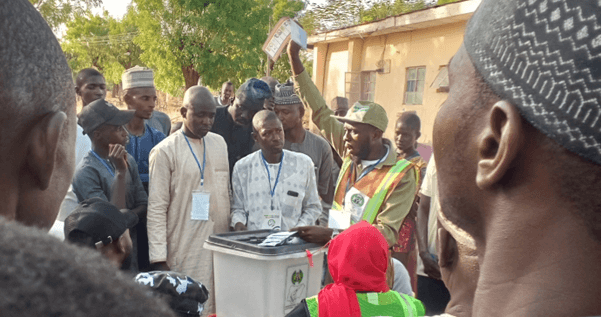
As Nigerians vote in the general elections this weekend, the public expects the process to be more credible than previous elections given the new Electoral Act, which has been designed to address the disenfranchisement of citizens and ensure fairness, credibility, and transparency in Nigerian elections. However, there are still concerns about the state of insecurity in the country. For instance, recent security warnings from the United State Embassy and Consulate in Nigeria advising their citizens not to travel to 15 states in the country due to insecurity— crime, terrorism, civil unrest, and kidnapping—have exacerbated public fears. In what follows, we take a brief look at the historical issues of electoral violence in Nigeria, how these issues might pose a threat to the 2023 elections, and the measures that can be taken by the Independent National Electoral Commission (INEC) and security agencies to prevent violence in during the 2023 elections and in future elections.

Read More

INEC’s Failures Define the Nigerian General Elections

INEC’s Failures Define the Nigerian General Elections

The All Progressives Congress’ Bola Tinubu has been announced as the President-elect and the victor of this process. Given the range of problems, it’s likely that this result will be contested by the other major parties and disputed by a significant share of the public. In fact, the People’s Democratic Party, Labour Party and New Nigeria People’s Party have already called on INEC to cancel the results and hold fresh elections. That’s a demand that will most likely not be met, leaving the convoluted electoral dispute resolution process at the Courts as their only real recourse.

Read More

Africa: Coups are on the rise, but proactive policies can restore faith in democracy

Africa: Coups are on the rise, but proactive policies can restore faith in democracy

Military officers in Libreville, Gabon announced control of the country after the incumbent president, Ali Bongo was declared the winner of the 26 August Presidential elections. The military officers headed by General Brice Nguema – now the transitional leader—declared themselves the Committee for the Transition and Restoration of Institutions. The announcement was met with jubilations across the country as citizens celebrated the end of the Bongo family’s 56-year rule. This article provides an an in-depth analysis of the new wave of military coups in Africa and recommendations to restore faith in democracy on the continent.

Read More